Johanngeorgenstadt
Largest free-standing candle arch in the world
On December 15, 2012, the world's largest free-standing candle arch was inaugurated in Johanngeorgenstadt for the 20th Original Johanngeorgenstadt Candle Arch Festival. This giant is 25 m wide and 14.5 m high with candles and consists of 700 tons of reinforced concrete and 15 tons of stainless steel.
The new attraction, like the giant pyramid, was donated by Johanngeorgenstadt entrepreneur Siegfried Ott.
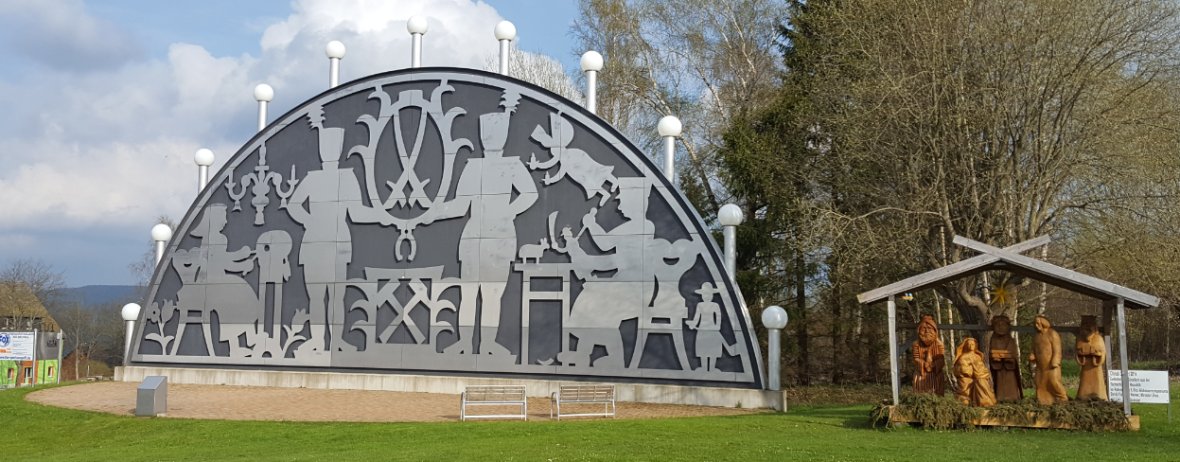
Explanation of the symbols in the candle arch
Miracle Flower
: It symbolizes the folklore of the Ore Mountains. Lace-maker
:
She represents an aspect of Ore Mountain folk art that is known to be more than just "toy-making." Miners
:
They symbolize mining in Saxony. The first candle arches were used during Mass celebrations.
The rising
flowerIt suggests that folk art found fertile ground in the Ore Mountains.
SwordsThey symbolize the Free State of Saxony. The horseshoe below serves as a reminder that a mountain blacksmith invented the Schwibbogen.
Flasks and
ironsThese are further symbols of mining, which has shaped the Ore Mountains.
Light angels, woodcarvers, and incense
menThey represent Ore Mountain folk art, which brings joy to people especially during the Christmas season.
Giant pyramid
The new large pyramid was inaugurated and set in motion for the first time at the 22nd Original Johanngeorgenstadt Candle Arch Festival on December 13, 2014.
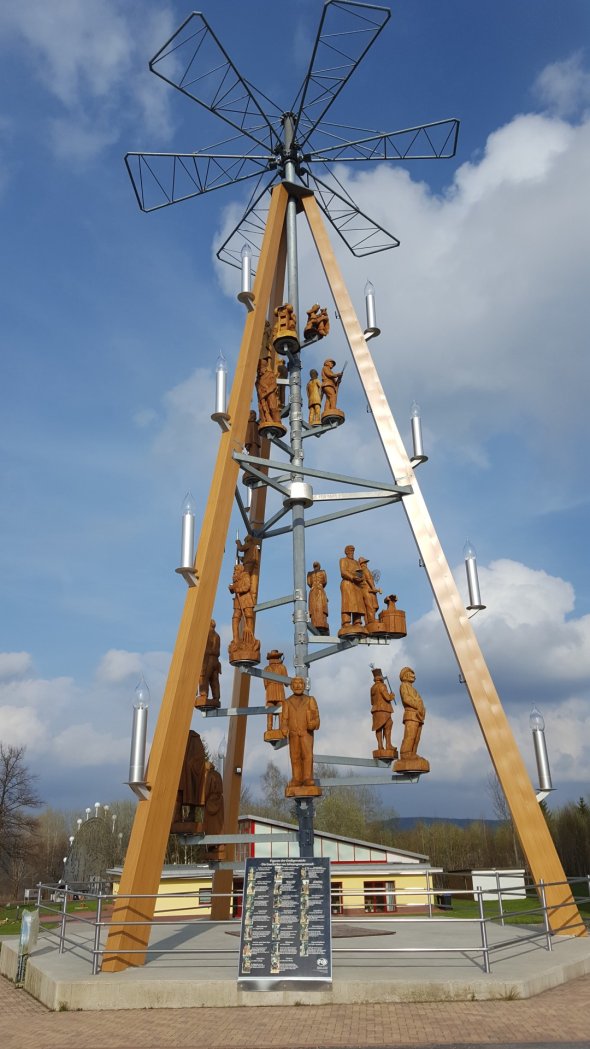
With the goal of creating a new standard for outdoor pyramids, preparations for construction have been underway for over a year, with careful consideration given to the design, shape, and layout. On August 27, 2014, ground was broken to begin construction of the largest pyramid in the Ore Mountains. Standing
over 26 meters tall with a wingspan of 11 meters, this giant made of concrete and stainless steel has few rivals worldwide. The new attraction, like the
giant Schwibbogen, was donated by Johanngeorgenstadt entrepreneur Siegfried Ott.
The figures and their significance for Johanngeorgenstadt
Exiles on the Run (Friedhelm Schelter)
Religious refugees (exiles) from the Bohemian region of Platten founded the town of Johanngeorgenstadt on February 23, 1654, with the permission of Elector Johann Georg I.
Elector Johann Georg I of Saxony (Robby Schubert)
The Elector permitted the Bohemian exiles to settle here on the condition that the new town bear his name.
School Director Christian Friedrich Röber (Michael Rössel-Rothe)
The local poet Röder from Johanngeorgenstadt is considered the founder of dialect poetry in the Ore Mountains.
Local poet Max Schreyer (Paul Brockhage)
A native of Johanngeorgenstadt, he wrote, among other works, the song “Lied vom Vugelbeerbaam.”
Johanngeorgenstadt Mining Master (Jesko Lange)
The mining master, dressed in the uniform of the local mining district from 1786, symbolizes silver ore mining.
Wittigsthal Hammer Smith (Dietmar Lang)
This figure commemorates the former hammer mill in the Wittigsthal district.
Steinbach Tin Smiths (Jörg Bäßler)
Over-the-knee boots and hooded robes are characteristic of the tin smiths who founded Steinbach in 1530, a later district of Johanngeorgenstadt.
Glassmakers from Jugel (Peter Duus)A glassworks
had existed in Jugel since 1571, which also produced glassware for the Saxon court.
Casket Maker (Peter Eberlein)
In the 19th century, high-quality caskets, some featuring valuable inlay work, were crafted in Johanngeorgenstadt.
Mountain Blacksmith with Candle Arch (Uwe Demmrich)
In 1740, the Johanngeorgenstadt blacksmith J. C. Teller crafted the world’s first candle arch, thus establishing a long-standing Erzgebirge tradition.
Glove maker (Tobias Michael)
Factory owner L. Cohn is considered the founder of the glacé glove industry (1869) in Johanngeorgenstadt, which subsequently became the most important production site for this trade in Europe.
Exhaust Pipe Maker (Ronny Tschierske)
This figure symbolizes the Fox-Sportauspuffe company and its managing director Siegfried Ott, the initiator and financier of the Great Pyramid and the Sculpture Symposium.
Wismut Miner (Siegfried Ott)
The Wismut miner embodies uranium ore mining, which had a lasting impact on Johanngeorgenstadt after World War II and was both a curse and a blessing.
Border Guard (Heinz Günther)
The figure symbolizes Johanngeorgenstadt as a border town and wears the uniform of a Saxon border guard from 1835.
Firefighter (Hartmut Rademann)
This figure represents the mountain town’s fire department, which, at 145 years old, is one of the oldest in the Ore Mountains.
Prof. Dr. med. habil. Heinz Eger (Andrej Löchel)
Prof. Eger is a distinguished cardiologist and radiologist who was born in Johanngeorgenstadt and now lives in Bad Berka.
Ski Jumper (Pavel Vitek)
He symbolizes the Wintersportverein 08 Johanngeorgenstadt e.V., its talented athletes, and the town’s ski jumps, including the Hans-Heinz-Schanze, Germany’s first large ski jump.
Summer Visitor (Volker Sesselmann)
She represents tourism and is deliberately designed in the style of the 1920s and 1930s, because the town experienced a boom in tourism during that period.
Lace Maker (Holm Ludwig)
Lace-making was traditionally a supplementary source of income for mining families.
Woodcarver (Johannes Düring)
The figure of the woodcarver symbolizes a former means of livelihood, a later leisure activity, and the preservation of Erzgebirge traditions.
Pferdegöpel - monument to the history of mining
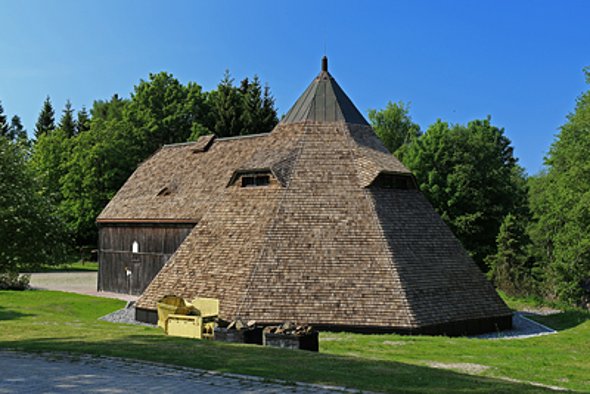
The horse-drawn pithead in Johanngeorgenstadt is a monument to the history of mining in the Ore Mountains. In a demonstration, you can experience shaft hoisting with the help of 2 horsepower in the faithfully reconstructed display facility. The exhibition in the hat house and the mining nature trail invite you to visit.
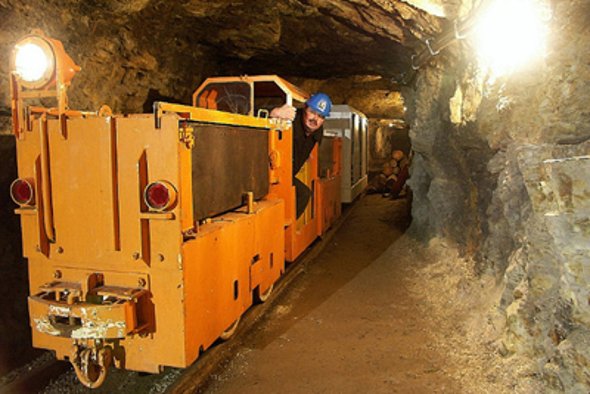
Frisch Glück "Glöckl" educational & show mine
Wittigsthalstrasse 13-15
Over 300 years of mining history and over 500 million years of the earth's history are brought to life here and will inspire you. We offer all age groups from the age of 5 an informative, educational, entertaining, humorous and amusing journey to the sites of history - on comfortable paths and always well looked after.
Home room
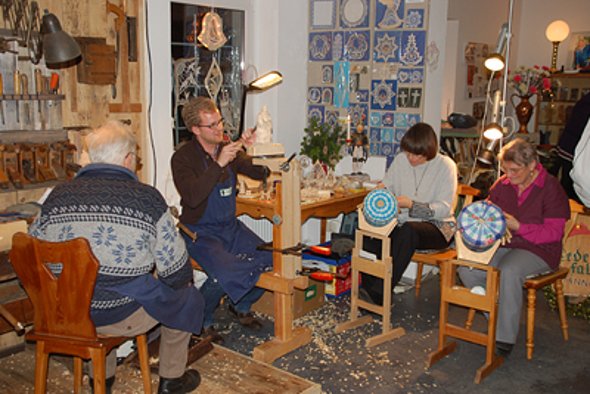
You are cordially invited to get to know a part of the old craft tradition of Johanngeorgenstadt and the folk art of the Ore Mountains. You will not simply be shown finished pieces, but will be able to follow the production of the glove maker and candle arch maker with your own eyes.
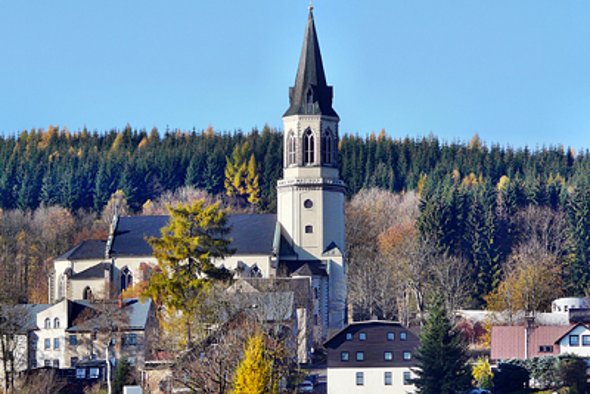
City church
Church square 7
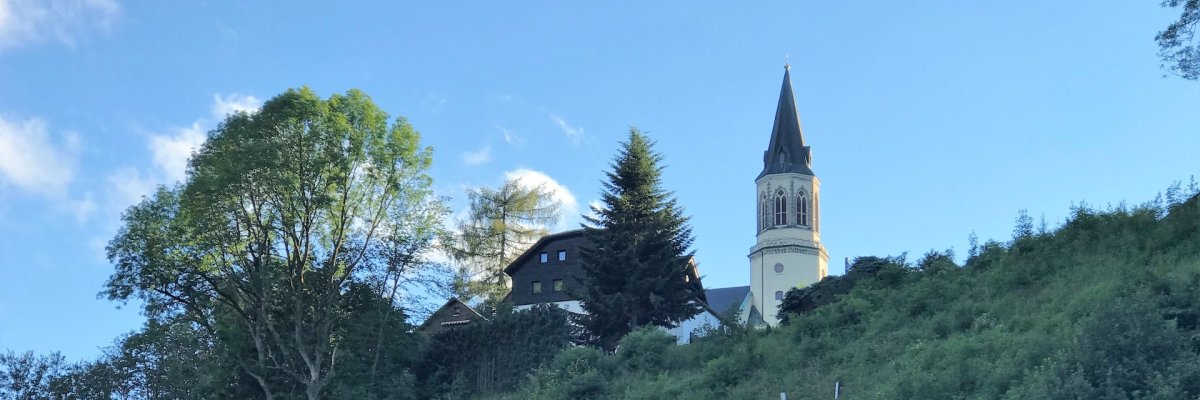
The new Evangelical Lutheran town church was consecrated on August 27, 1872. Designed by the architects Arnold and Pfau from Annaberg, it was rebuilt in the neo-Gothic style in the form of a three-aisled, five-bay hall with a recessed choir. The tower with the cross on top reaches a height of 67 meters.
Ski jumping facilities
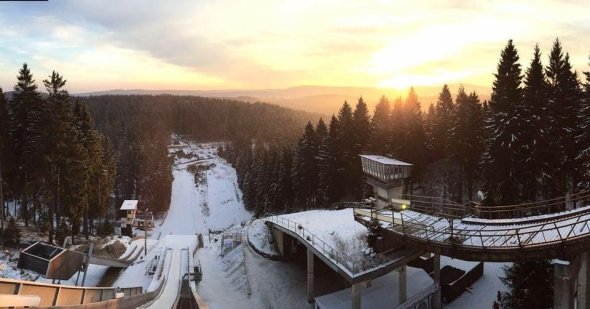
The ski jumping facilities consist of a total of 4 ski jumps. The largest of these is the Hans Heinz ski jump, built in 1929 and later known as the Erzgebirgsschanze. Since the end of 2000, however, it can no longer be used as it no longer meets the profile and safety requirements. Directly next to the large ski jump are the youth ski jump, completed in 1937, and the pupils' ski jump, built in 1977/78. Both ski jumps are still used for competitions today, as is the pupils' ski jump at the old ice stadium.
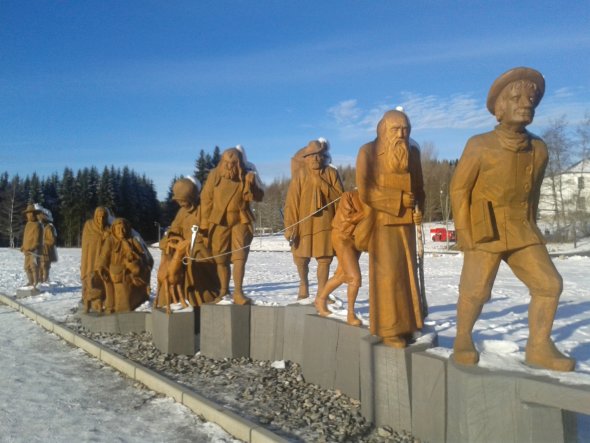
Exulant train
There was a very special program highlight at the 27th Original Johanngeorgenstadt Candle Arch Festival. The entrepreneur Siegfried Ott presented the town of Johanngeorgenstadt with 14 carved oak figures, which in their entirety represent the exulant procession. In November 1653, 100 families fled from Bohemian Platten (today Horní Blatná) to Saxony because of their Protestant faith. They were taken in by the village of Jugel, which is now part of Johanngeorgenstadt. Following a written request to Elector Johann Georg I, they were granted permission to build a town on the Fastenberg on February 23, 1654.
The figures are located on the renovated slag heap 42 in Mittelstadt in the area between the Pferdegöpel, Schwefelwerkstraße and the giant pyramid. A small park is to be created around the figures in the near future.
Henneberg plant trail
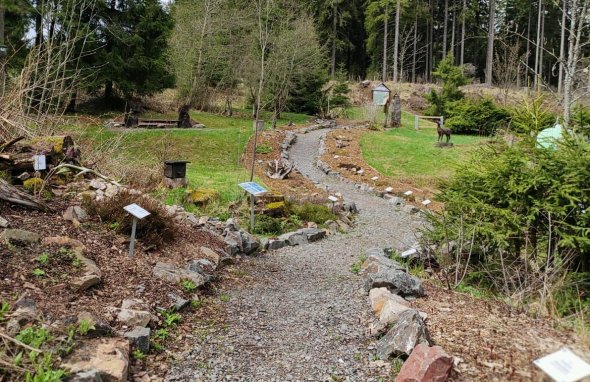
The Henneberg Nature Trail takes you on an 80-meter circular walk through a plant world that is otherwise found only in raised bogs. Here you’ll have the opportunity to marvel at sundew, cotton grass, rosemary heath, and dwarf birches, among other plants. The nature trail can be
visited year-round, regardless of the season, and from May through October, the various plants come to life depending on the species.
A visit is possible at any time without prior reservation.
Places of interest in the region
Eibenstock
Embroidery museum
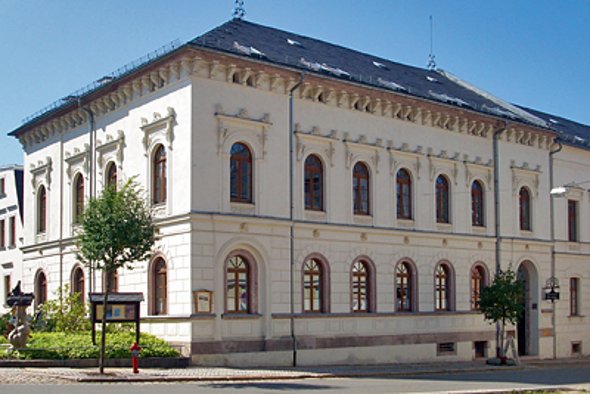
Bürgermeister-Hesse-Straße 7/9
At the Eibenstock Embroidery Museum, you can explore the history of
Eibenstock’s embroidery industry and the mountain town of Eibenstock. You’ll see historic embroidery machines in operation, artifacts from tin and iron mining, and a model of what was once Germany’s steepest standard-gauge railway.
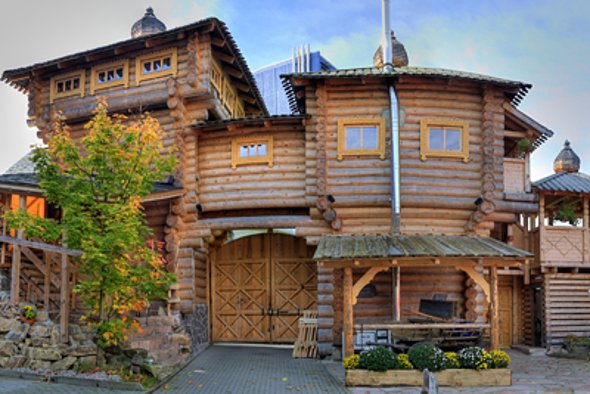
Bathing gardens
Feel the beneficial effects of the water and relax in a unique garden and sauna landscape with a spa hall, massage pool, Kneipp facilities, solariums and themed saunas. Children's hearts also beat faster: giant slide, current channel, children's pool with real sandy beach.
Auersberg with observation tower
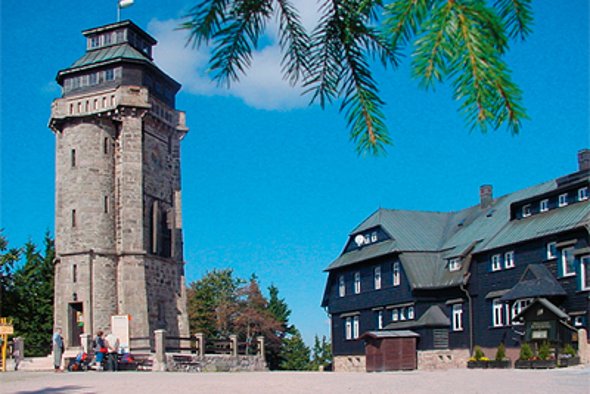
At 1019 m, the Auersberg, which belongs to the mountain town of Eibenstock, is considered the "second highest mountain in Saxony". The best place to start the ascent is the idyllic Wildenthal district at the foot of the Auersberg. However, numerous hiking trails also lead from Eibenstock, Blauenthal, Sosa or Sauschwemme through dense mountain forest up to the summit. From the impressive viewing tower, you can enjoy a wonderful panoramic view of valleys and heights, towns and villages, dams and seemingly endless forests.
Information about:
Schwarzenberg
Schwarzenberg Castle
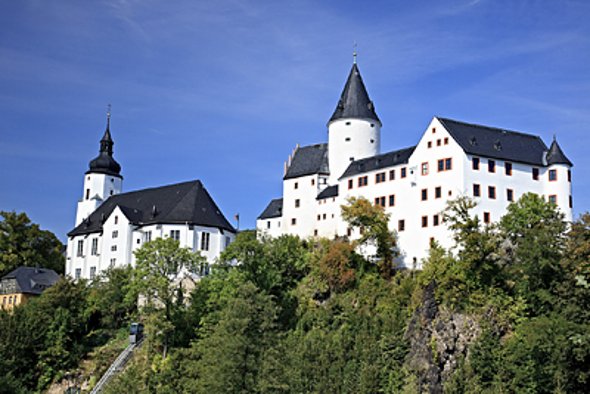
Obere Schlosstraße 36
The exhibition in the former electoral hunting lodge provides information on the history of the castle and the town as well as the history of mining in the Westerzgebirge. The museum provides insights into the work of traditional trades such as plumbers and locksmiths.
Railroad museum
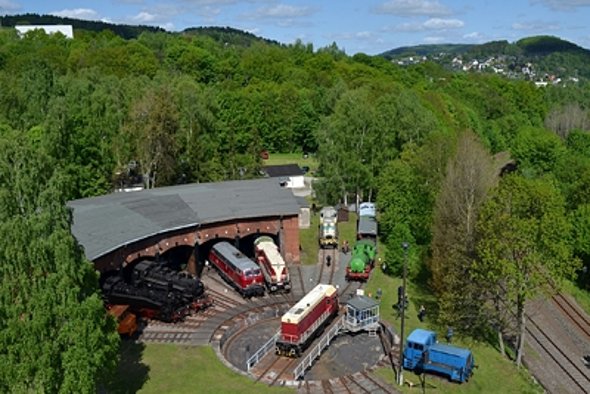
Schneeberger Street 60
The Sächsischer Eisenbahnfreunde e.V. association runs a museum with an extensive collection of historic locomotives, carriages and technical equipment on the site of the station's former depot. The historic steam train also departs from here for trips through Saxony.
Snow mountain
Museum for mining folk art
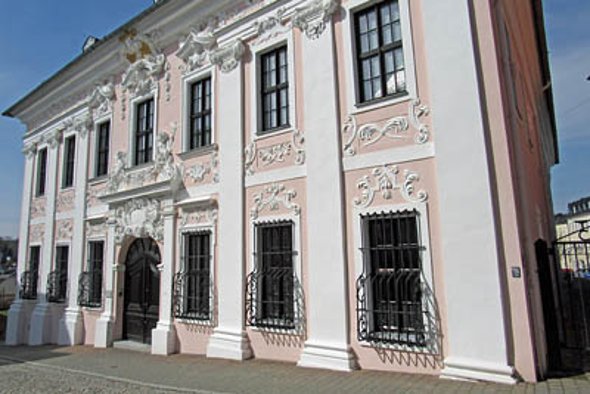
The Museum of Mining Folk Art is located in one of Schneeberg's many baroque buildings, the Bortenreuther House. It is a special ethnographic museum that presents the history of the town and mining, the art of carving in the Westerzgebirge, local and Christmas mountains, pyramids and lace-making.
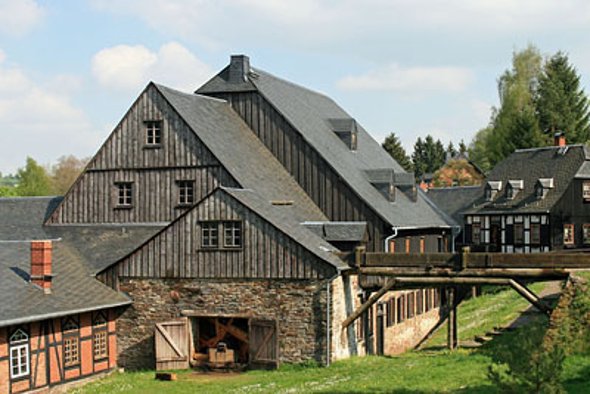
Siebenschlehner Pochwerk
Lindenauer Street 22
OT Neustädtel
From the 16th to the 19th century, the Schneeberg mining district was the world's largest source of cobalt ore, from which the famous cobalt blue was produced. One of the most important monuments to cobalt mining is the Technical Museum, which was used to process the mined ores.
St. Wolfgang's Church
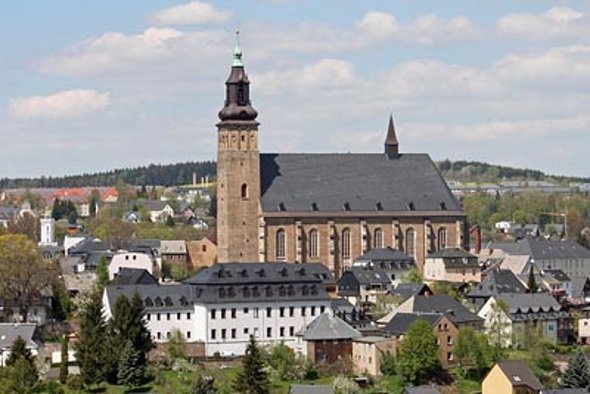
Kirchgasse 7
One of the largest and architecturally exquisite churches of the late Gothic period - it was built in 1516-1540 by Hans von Torgau, the Saxon court architect, combining Gothic and Renaissance styles, and in 1539 received the first and most complete altar of the Lutheran Reformation from the workshop of Lucas Cranach the Elder.
Waschleithe
Home corner display
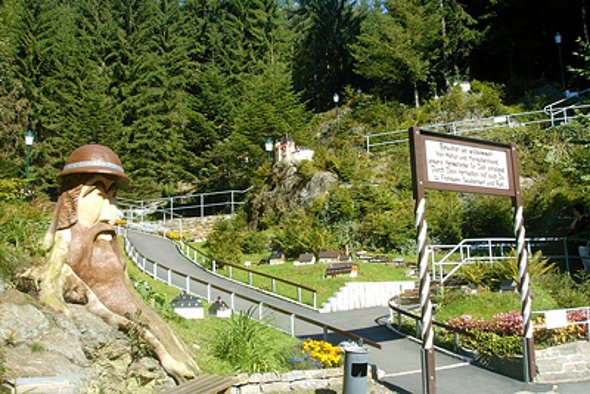
Since its foundation in 1961, the Heimatfreunde Waschleithe e.V. association has done a great deal of work in the field of cultural heritage. Every year, many hours of work are put in together to set up, maintain and care for the display site. The display of sights of the Erzgebirge "in miniature", created in their spare time by volunteers, is admired by many visitors over the course of the season. The display is open daily from April to October from 9.00 am to 6.00 pm.
Nature and wildlife park
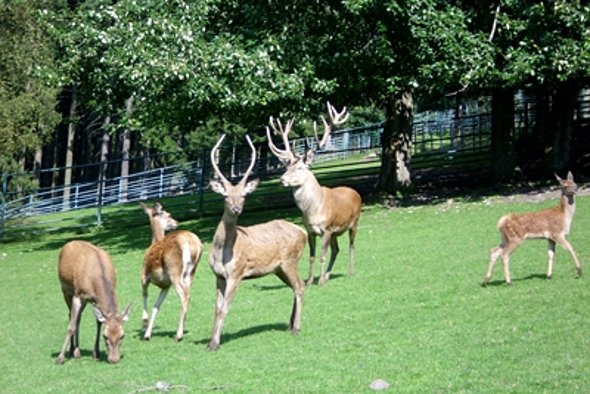
Mühlberg 56
OT Waschleithe
With its predominantly native animal species and extensive forest park grounds, the nature and wildlife park is one of the most beautiful zoos in the region. More than 250 animals from over 40 species feel right at home on an area of 5.4 hectares. In addition to red deer, otters and reindeer, Waschleithe is also home to many old domestic animal breeds such as woolly pigs and zackel sheep. A visit to the nature and wildlife park guarantees relaxation and animal experiences for young and old at any time of year. Exciting guided tours, adventure programs and animal encounters in the petting enclosure delight children of all ages. Additional fun and entertainment for the whole family is provided by events such as Easter egg hunts, baking days and fish festivals.
Breitenbrunn
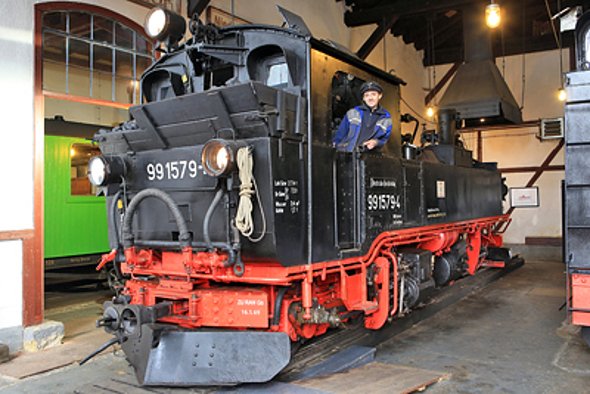
Saxon Narrow Gauge Railway Museum
The museum shows a station as it was in the days of the Kaiser with historic service rooms and over 50 rail vehicles from the history of the Saxon narrow-gauge railway. Permanent exhibitions on topics such as the old haulage system of the Ore Mountains or Saxon steam locomotive construction enrich the varied offer.
Technical Museum "Silver Washing"
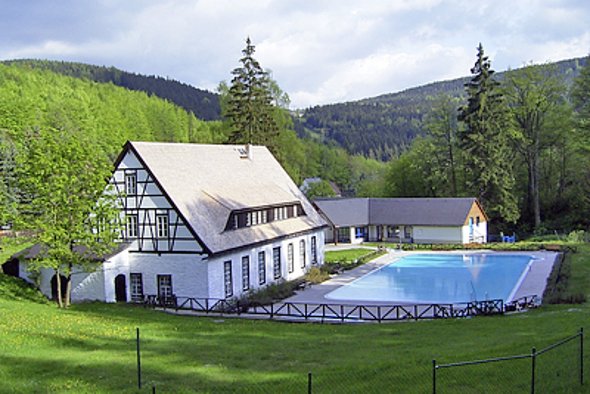
The museum provides an insight into the history of silver mining in the Ore Mountains. The show plant, known as the "Pochwäsche", provides a practical insight into the hard work of processing ore for smelting.